
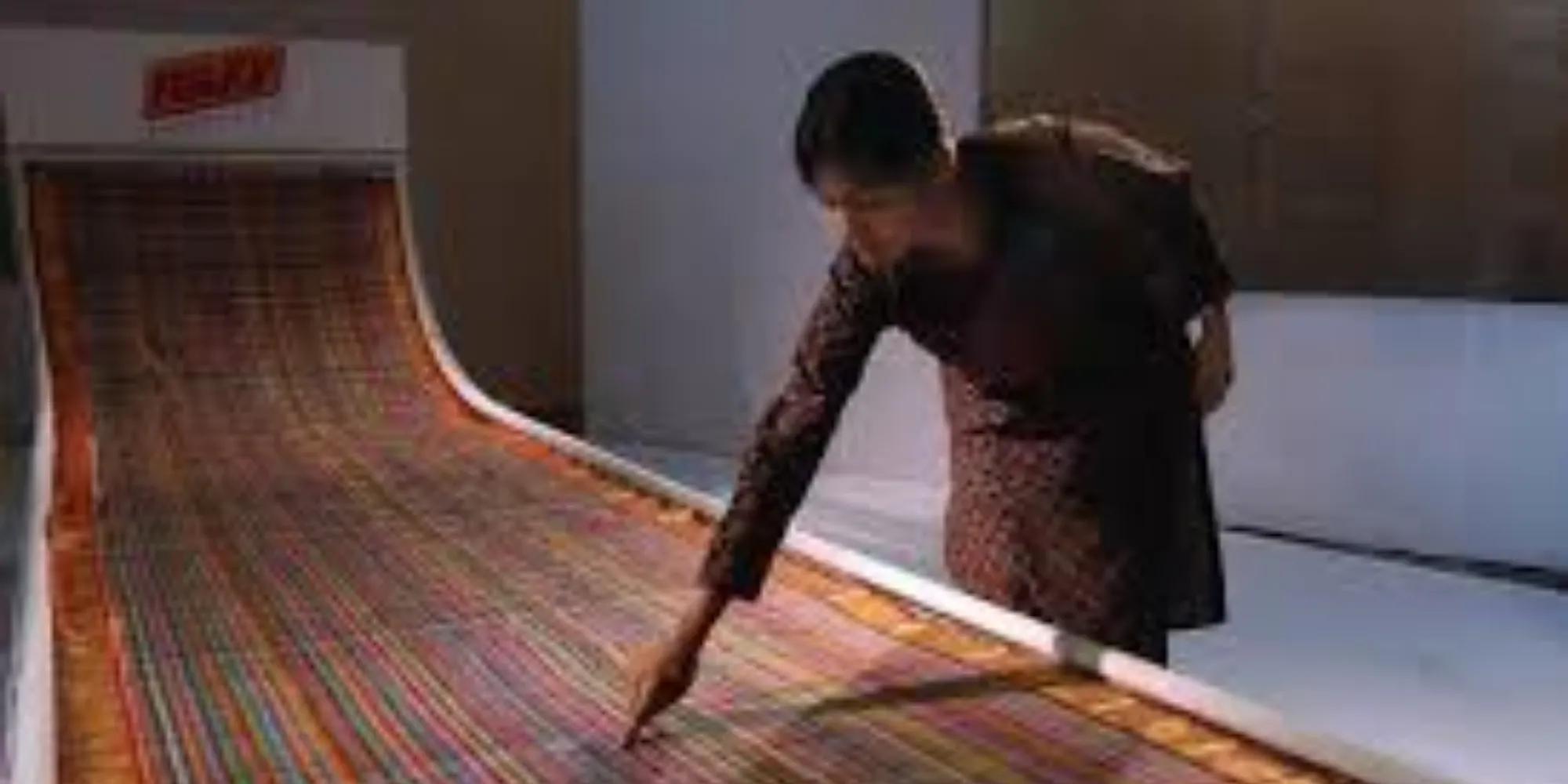
1. Kanchipuram Silk Sarees—
A famous handwoven silk saree made in Kanchipuram, often called “Kanjeevaram saree.”
Materials & Technique:- Made from pure mulberry silk,Uses zari (gold/silver threads),Body and border are woven separately and then joined
This strong joining makes the saree very durable
Features: Bright, rich colors, Heavy gold borders
2. Tanjore Painting
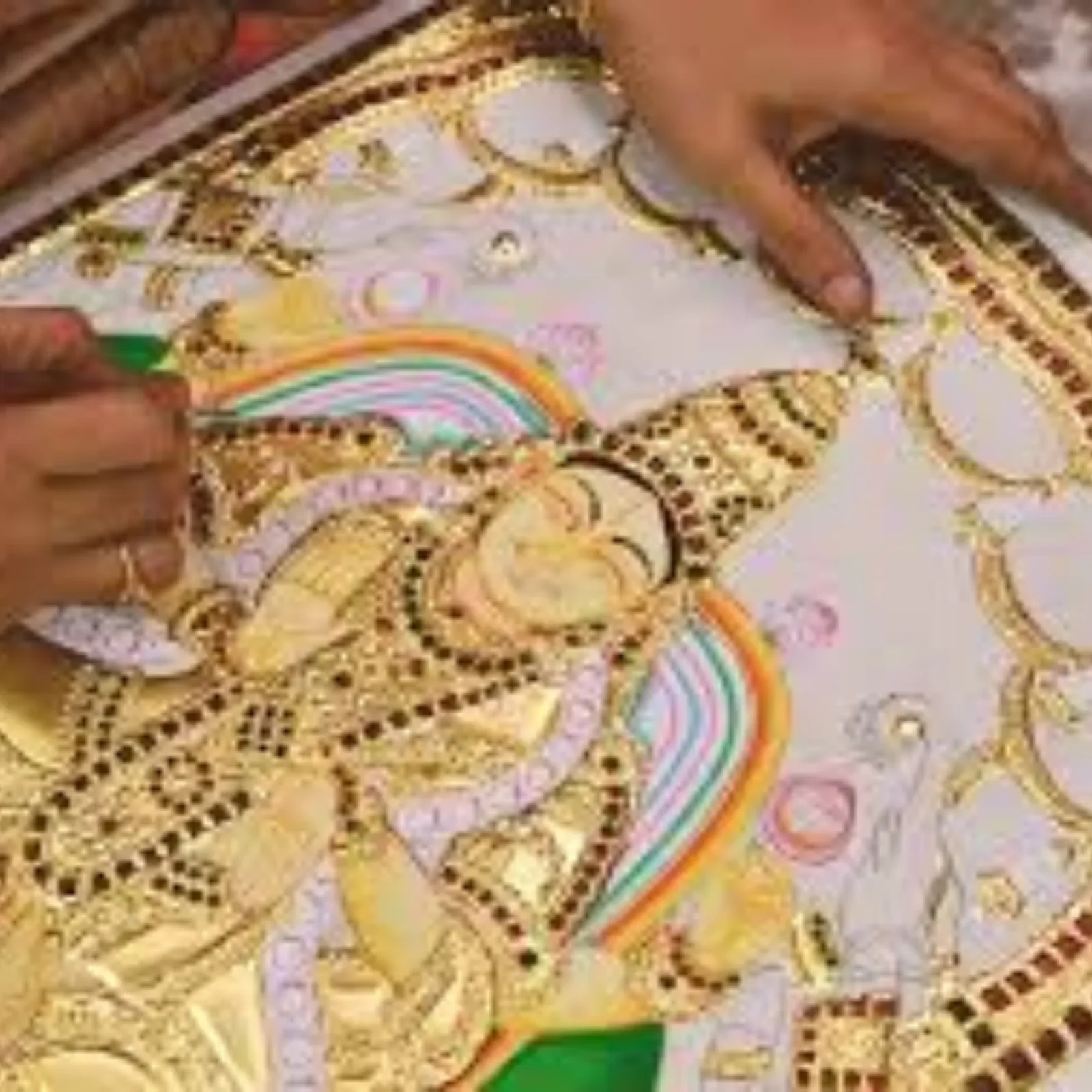
A classical painting style known for its rich colors, gold foil work, and 3D effect.
Materials & Process: Painted on wooden board
Steps:
- Cloth pasted on board
- Coated with chalk and glue
- Sketch drawn
- Gold foil and stones added
- Painted with bright colors
- Uses gold, glass, pearls for decoration
Features: Shiny gold surface, Bold outlines, Central figure (mostly gods)
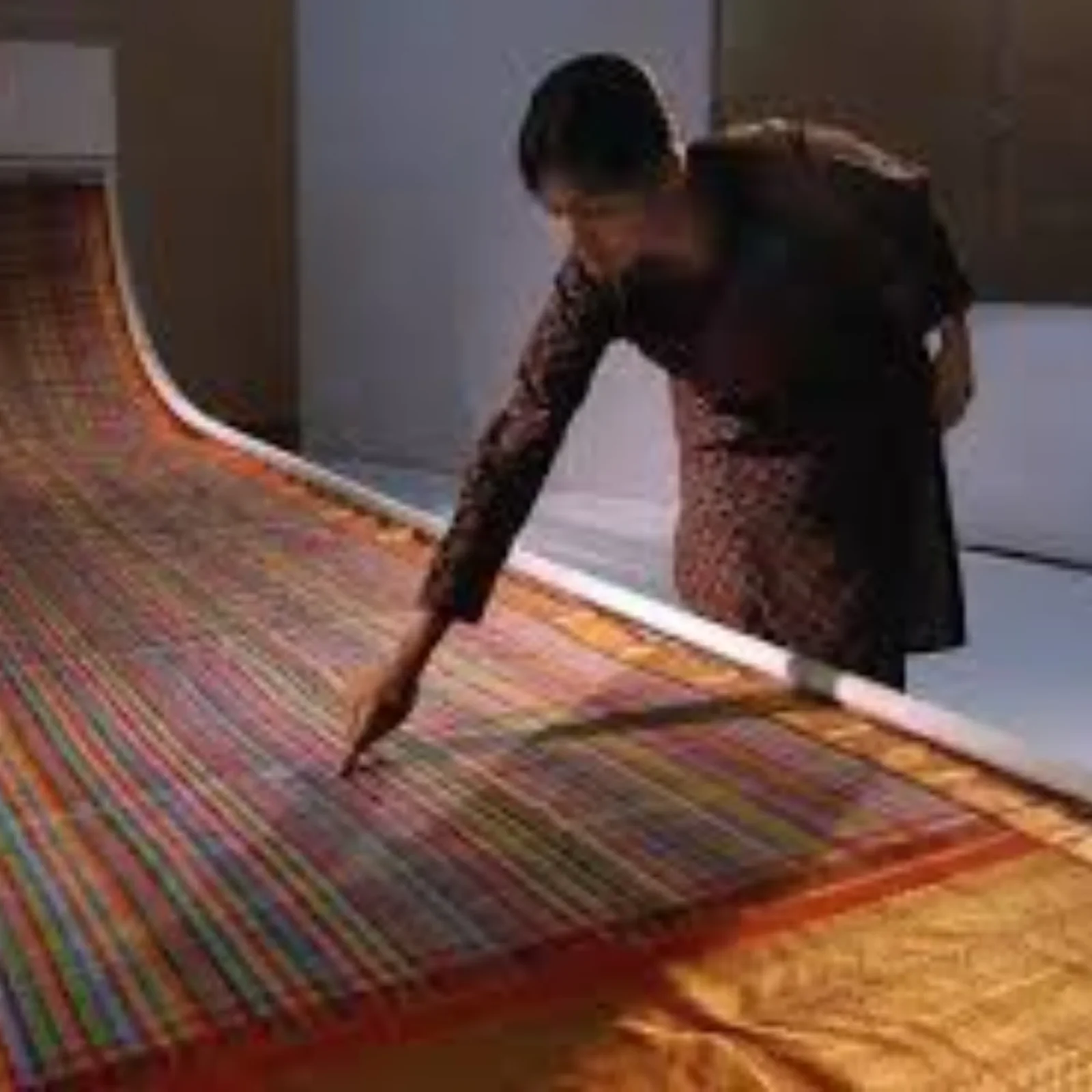
1.Kanchipuram Silk Sarees
A famous handwoven silk saree made in Kanchipuram, often called “Kanjeevaram saree.”
Materials & Technique:- Made from pure mulberry silk,Uses zari (gold/silver threads),Body and border are woven separately and then joined
This strong joining makes the saree very durable
Features: Bright, rich colors, Heavy gold borders
2.Tanjore Painting
A classical painting style known for its rich colors, gold foil work, and 3D effect.
Materials & Process: Painted on wooden board
Steps:
- Cloth pasted on board
- Coated with chalk and glue
- Sketch drawn
- Gold foil and stones added
- Painted with bright colors
- Uses gold, glass, pearls for decoration
Features: Shiny gold surface, Bold outlines, Central figure (mostly gods)
3. Bronze Casting
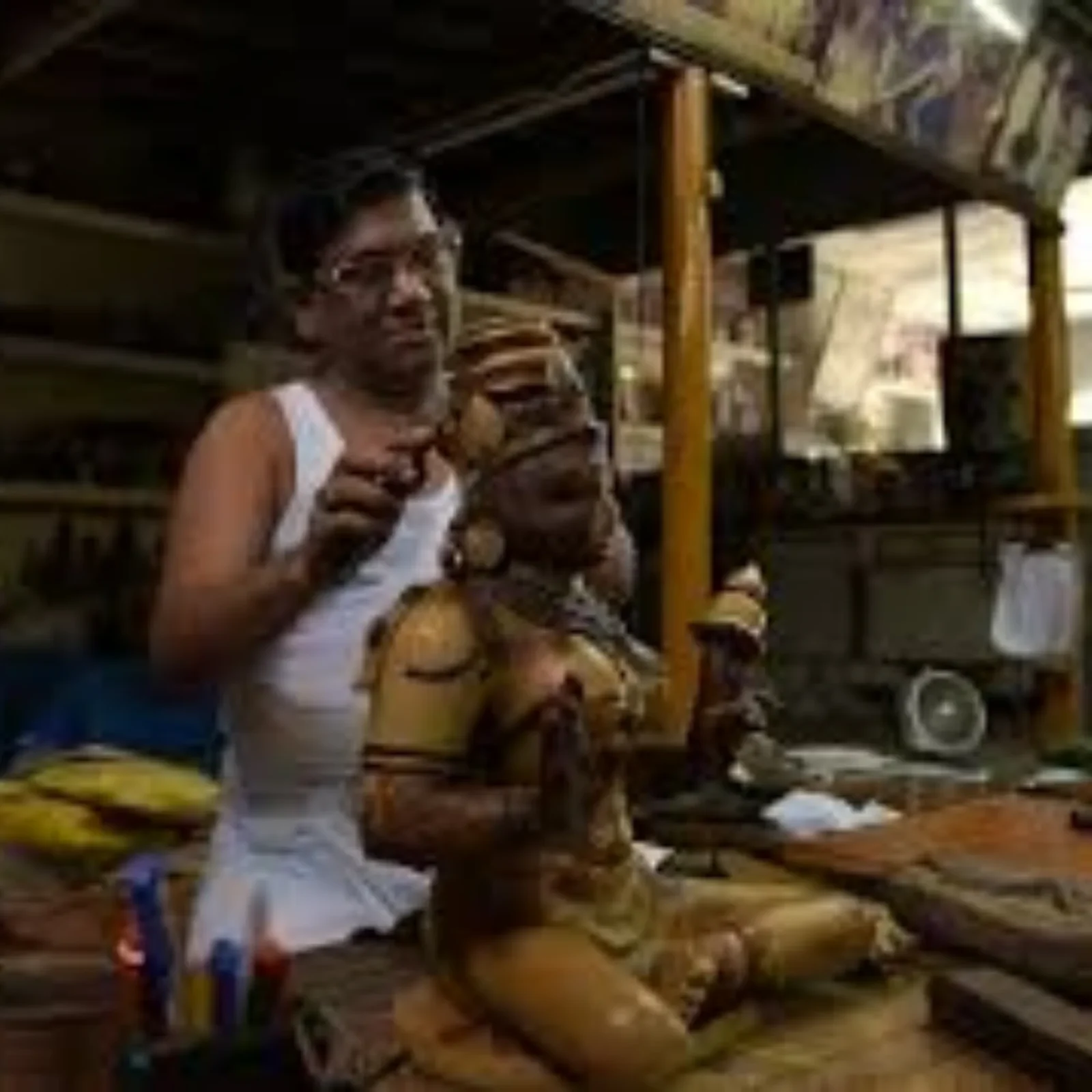
Bronze casting in Tamil Nadu is one of the most celebrated traditional crafts, especially known for its development during the Chola Dynasty. This craft involves creating beautiful metal sculptures, mainly of Hindu deities, using the ancient lost-wax technique. In this process, artisans first make a detailed model of the figure using wax, which is then covered with layers of clay to form a mold. When the mold is heated, the wax melts and flows out, leaving a hollow space into which molten metal, usually a mixture called panchaloha, is poured.
4. Stone carving
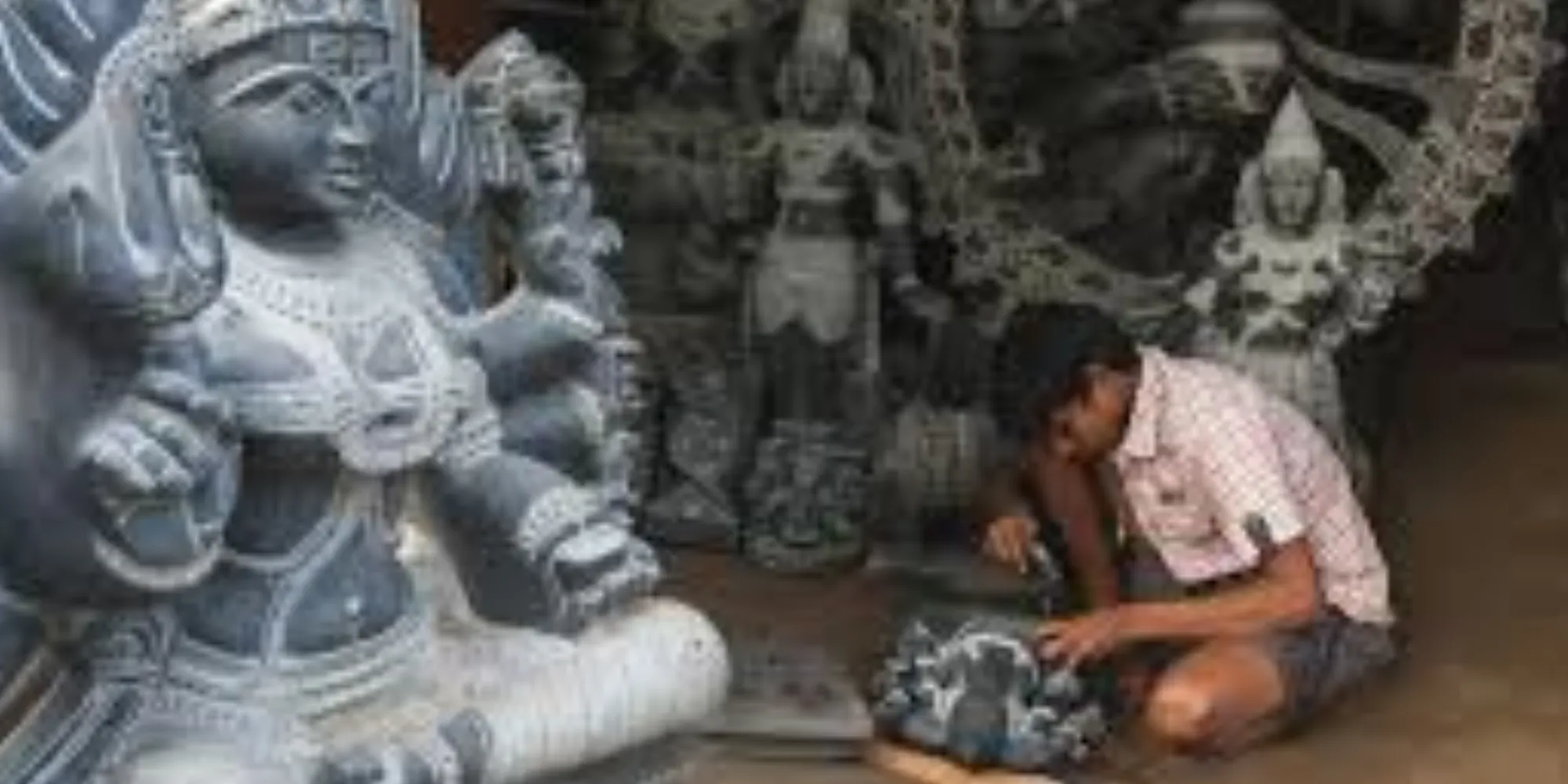
Stone carving in Tamil Nadu is another highly respected craft that reflects the grandeur of temple architecture in the region. This art involves shaping hard stones like granite into intricate sculptures, pillars, and architectural elements.
The process requires immense skill and patience, as artisans carefully carve designs using simple tools such as chisels and hammers, following traditional guidelines passed down through generations. Places like Mamallapuram are famous for their stone carvings, which showcase the richness of Dravidian art and culture.
5. Palm leaf craft
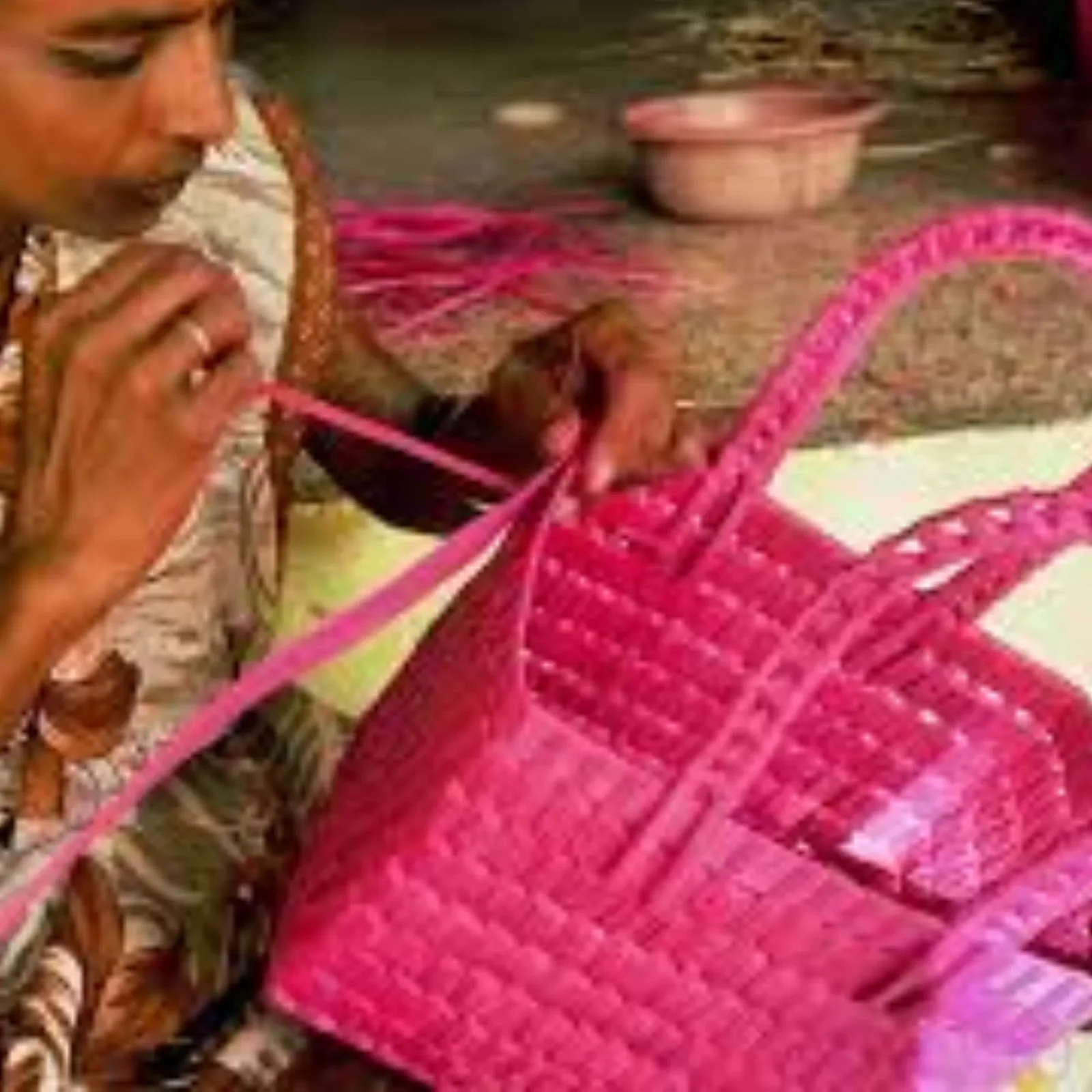
Palm leaf craft, also known as Olai craft, is a traditional eco-friendly craft practiced in Tamil Nadu using dried palm leaves.
In earlier times, palm leaves were used as a medium for writing manuscripts, preserving knowledge, literature, and religious texts. The process begins with collecting and drying the leaves, which are then cut into strips and sometimes dyed using natural colors. Skilled artisans weave or shape these strips into a variety of products such as baskets, mats, storage boxes, and decorative items.
4. Stone carving
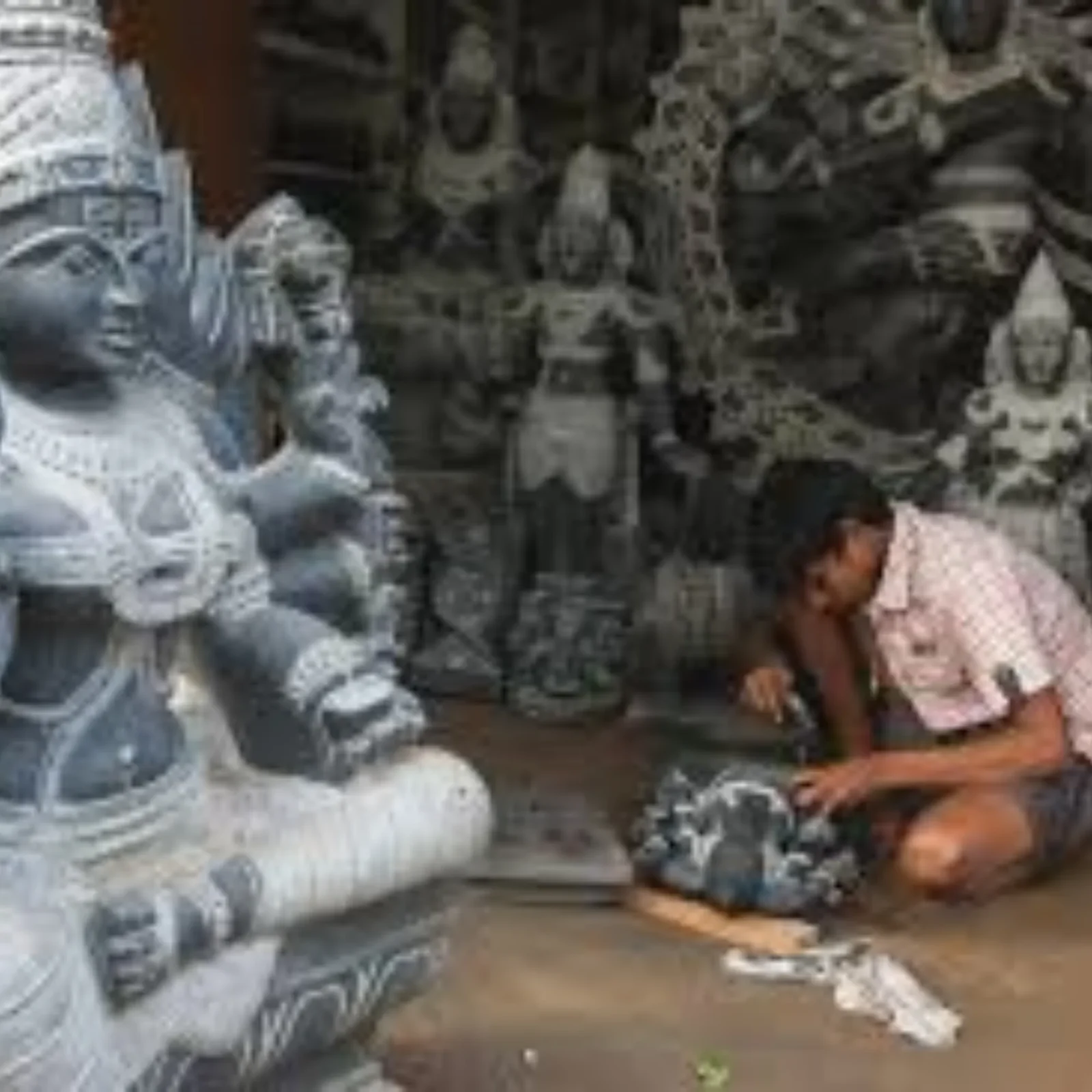
Stone carving in Tamil Nadu is another highly respected craft that reflects the grandeur of temple architecture in the region. This art involves shaping hard stones like granite into intricate sculptures, pillars, and architectural elements.
The process requires immense skill and patience, as artisans carefully carve designs using simple tools such as chisels and hammers, following traditional guidelines passed down through generations. Places like Mamallapuram are famous for their stone carvings, which showcase the richness of Dravidian art and culture.
5. Palm leaf craft
Palm leaf craft, also known as Olai craft, is a traditional eco-friendly craft practiced in Tamil Nadu using dried palm leaves.
In earlier times, palm leaves were used as a medium for writing manuscripts, preserving knowledge, literature, and religious texts. The process begins with collecting and drying the leaves, which are then cut into strips and sometimes dyed using natural colors. Skilled artisans weave or shape these strips into a variety of products such as baskets, mats, storage boxes, and decorative items.